
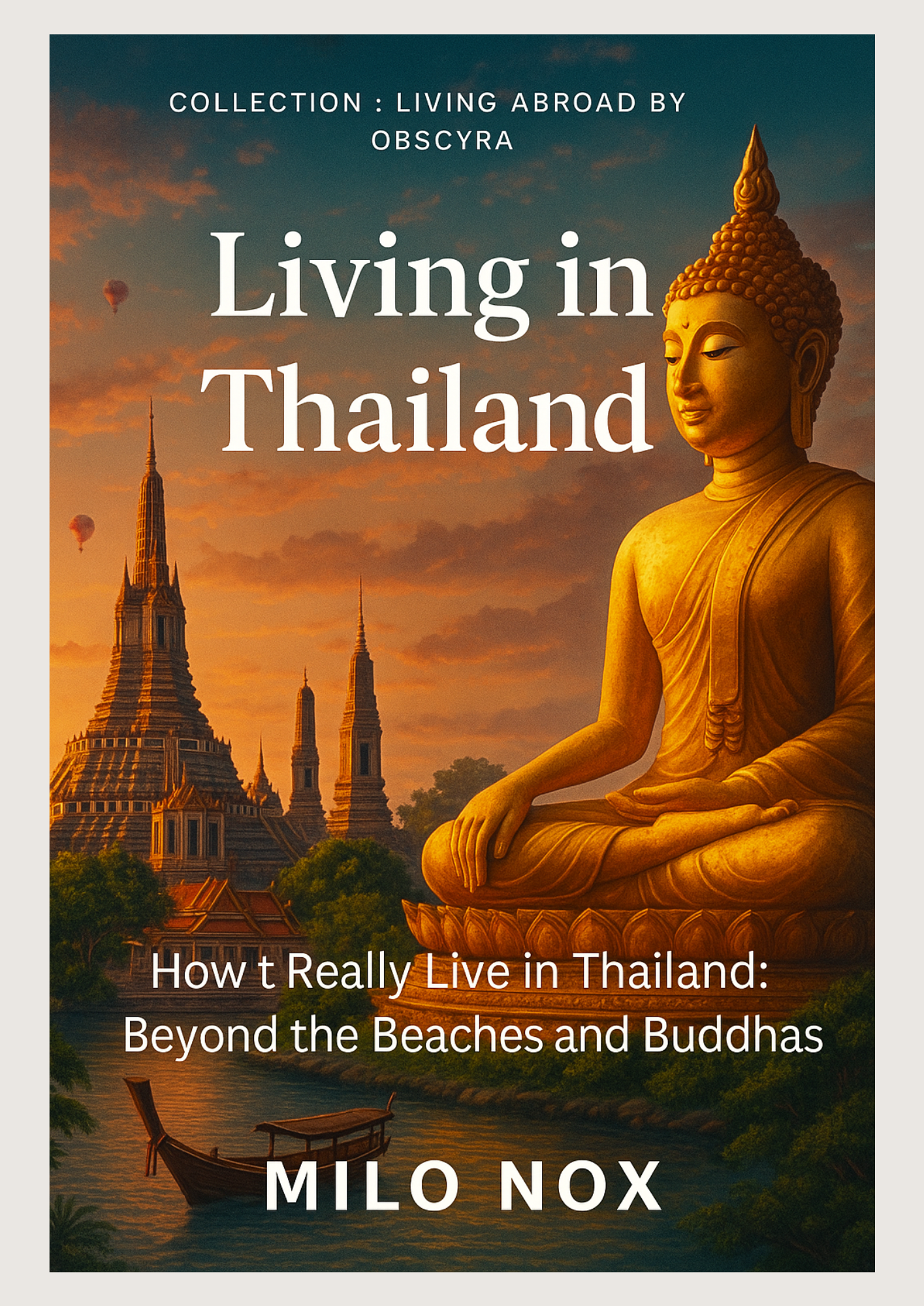
Living in Thailand
A practical guide to understanding Thailand beyond tropical clichés and expat fantasy.
Avant de partir, comprends le terrain.
Thailand is often sold as an easy tropical escape, but living there is shaped by realities that go far beyond beaches and low-cost fantasies. Daily life involves visas, bureaucracy, healthcare choices, housing realities, cultural codes, tax questions, regional differences, work limitations, and social expectations that many newcomers underestimate. Relocating to Thailand means understanding how the country actually functions beneath the expat marketing and where long-term life can look very different from a holiday experience.
Ce que tu vas comprendre
This guide helps you understand how relocation to Thailand works in practical terms. Visas, residency pathways, housing, taxation, healthcare, banking, work realities, schooling, transport, infrastructure, and the cost of daily life all require preparation. Thailand can appear accessible on the surface, but legal frameworks, administrative procedures, and practical realities often create more complexity than many newcomers expect.
You will also understand the social and cultural logic behind everyday life. Hierarchy, respect codes, indirect communication, family dynamics, religious presence, face-saving culture, regional contrasts, local etiquette, and the gap between expat zones and ordinary Thai life all shape how people integrate and adapt.
The guide also explores practical blind spots many expats face: visa assumptions, healthcare misunderstandings, housing scams, work permit limitations, cultural misreading, cost-of-living misconceptions, language dependency, legal restrictions, and the difference between travel fantasy and real long-term settlement.
Ce que ce guide ne promet pas
This guide does not promise that moving to Thailand automatically creates a cheaper, easier, or happier life. Every relocation project depends on legal eligibility, budget, work model, family realities, adaptation capacity, health needs, and your ability to function within systems that can be welcoming but also highly specific.
It does not replace official immigration information, legal professionals, tax advisors, employers, healthcare institutions, or Thai authorities. Its purpose is to help you understand the terrain better, avoid predictable mistakes, ask better questions, and make more informed decisions before relocating.
Sommaire détaillé
TABLE OF CONTENTS
CHAPTER 1 – INTRODUCTION
- 1.1 Why choose this country? –
- 1.2 What to expect in practice –
- 1.3 Quick cultural overview –
- 1.4 Political environment & freedoms –
- 1.5 Social fractures & tensions –
CHAPTER 2 – PREPARING YOUR DEPARTURE
- 2.1 Required documents by profile –
- 2.2 Visas – types, conditions, mistakes to avoid –
- 2.3 Health insurance – entry requirements –
- 2.4 Translations and equivalency –
- 2.5 Departure budget –
- 2.6 Pre-departure checklist –
- 2.7 Cancelling contracts in your home country –
- 2.8 Transport & international relocation –
CHAPTER 3 – SETTING UP LOCALLY
- 3.1 Finding housing –
- 3.2 Deposit & rental law –
- 3.3 Choosing a neighborhood –
- 3.4 Opening a bank account –
- 3.5 Tax ID & residence permit –
- 3.6 Setting up utilities (water, electricity, internet, etc.) –
- 3.7 Furnishing your home –
- 3.8 Legal translations & support –
- 3.9 Local infrastructure quality –
- 3.10 Grey zones & informal workarounds –
- 3.11 Buying property & mortgage system –
- 3.12 Vehicle import & registration –
CHAPTER 4 – WORKING IN THE COUNTRY
- 4.1 Overview of the job market –
- 4.2 Finding a job locally –
- 4.3 Salary ranges & cost of life –
- 4.4 Freelance & entrepreneurship –
- 4.5 Work culture & hierarchy –
- 4.6 Discrimination & work rights –
- 4.7 Getting paid & tax obligations –
- 4.8 Maternity, sick leave & benefits –
- 4.9 Remote work & hybrid systems –
- 4.10 Recognition of foreign qualifications –
CHAPTER 5 – STUDYING IN THE COUNTRY
- 5.1 School system –
- 5.2 Higher education –
- 5.3 Learning the local language –
- 5.4 Integrating expat children –
- 5.5 Alternatives & homeschooling –
CHAPTER 6 – HEALTHCARE SYSTEM
- 6.1 General structure –
- 6.2 Registration & entitlements –
- 6.3 GPs and specialists –
- 6.4 Hospitals and emergency care –
- 6.5 Pharmacies & medication –
- 6.6 Private or supplementary insurance –
- 6.7 Rural healthcare access –
- 6.8 Sexual & reproductive health –
CHAPTER 7 – DAILY LIFE & INTEGRATION
- 7.1 Daily rhythm & public holidays –
- 7.2 Food & shopping –
- 7.3 Transport & driving –
- 7.4 Social interaction –
- 7.5 Breaking the expat bubble –
- 7.6 Religion & religious diversity –
- 7.7 Local etiquette –
- 7.8 Regional lifestyle& –
- 7.9 Environmental norms –
- 7.10 Time, money & authority –
- 7.11 Everyday bureaucracy –
- 7.12 Everyday discrimination –
- 7.13 Disability & difference –
- 7.14 Informal survival strategies (“Plan B culture”) –
CHAPTER 8 – MONEY, TAXES & COST OF LIVING
- 8.1 Tax residency & treaties –
- 8.2 Income tax & VAT –
- 8.3 Banking, transfers & payments –
- 8.4 Legal optimization –
- 8.5 Real cost of living –
- 8.6 Inheritance & succession –
CHAPTER 9 – FAMILY & CHILDREN
- 9.1 Social benefits –
- 9.2 Early childhood & parenting culture –
- 9.3 Children’s activities & public spaces –
- 9.4 Family law –
- 9.5 LGBT+ families –
- 9.6 Mixed couples & intercultural relationships –
- 9.7 Local adoption –
CHAPTER 10 – PETS & ANIMAL COMPANIONS
- 10.1 Entry into the country –
- 10.2 Transport –
- 10.3 Rentals with pets –
- 10.4 Veterinary care –
- 10.5 Cultural perception –
- 10.6 Access to public spaces –
- 10.7 Climate & acclimatization –
- 10.8 Local adoption –
CHAPTER 11 – SAFETY & SECURITY
- 11.1 Crime & perception –
- 11.2 Natural risks –
- 11.3 Emergencies & responsiveness –
- 11.4 Police & military presence –
- 11.5 Everyday corruption –
- 11.6 Political unrest –
- 11.7 Digital discretion & personal protection –
- 11.8 Mapping social fault lines –
- 11.9 Justice & legal disputes –
- 11.10 Activism, protest & associated risks –
CHAPTER 12 – HIDDEN CHALLENGES
- 12.1 Loneliness & integration –
- 12.2 Environmental stress –
- 12.3 Cultural burnout –
- 12.4 Hidden language codes –
- 12.5 Mutual aid networks –
- 12.6 Dealing with uncertainty –
- 12.7 Reverse culture shock –
- 12.8 Leaving the country –
CHAPTER 13 – WHAT NOT TO DO: TRAPS, MISTAKES & ILLUSIONS
- 13.1 Cultural and legal no-gos –
- 13.2 Behaviors that come off as arrogant or offensive –
- 13.3 Language mistakes to avoid –
- 13.4 The expat illusions you should dismantle –
- 13.5 Mental deprogramming & unconscious bias –
- 13.6 The reality check test –
CHAPTER 14 – OFF-THE-RADAR PLACES, TRADITIONS & EXPERIENCES
- 14.1 Hidden or overlooked nature –
- 14.2 Rural, minority & traditional communities –
- 14.3 Unique accommodations –
- 14.4 Living rituals & traditions –
- 14.5 A hidden gem per region –
CHAPTER 15 – ESSENTIAL TOOLS & LOCAL RESOURCES
- 15.1 Must-have apps –
- 15.2 Official portals –
- 15.3 Forums & online communities –
- 15.4 Places to socialize –
- 15.5 Local media –
- 15.6 Alternative channels –
CHAPTER 16 – FINAL THOUGHTS & SMART CHECKLIST
- 16.1 Strengths & weaknesses of the country –
- 16.2 Who thrives (and who struggles) –
- 16.3 Keys to making it work –
- 16.4 What you can do now –
Guides proches

Lire le chapitre 1
Tu peux consulter le premier chapitre avant d’acheter le guide.